

A diverse range of cutting-edge technologies enables universities and colleges to create environments where every screen is harmonized with the room’s natural light and unique academic purpose. It enables them to move beyond one-size-fits-all models to embrace the versatility of modern display ecosystems.
All-in-one (AIO) dvLED displays can be placed in high-ambient light environments thanks to 600 nits of brightness. This makes AIO dvLED an option in the range of display technologies available to higher-ed buyers. The all-in-one design provides the additional benefit of including all essential components into a single self-contained unit.
Epson’s AIO dvLED line, the LE-C1 series, leans into that self-contained idea. The controller and power supply sit inside the cabinet. The LED modules arrive factory-calibrated with a preconfigured controller for quick deployment. And the display is operating system-free, featuring essential controls for a “set-it-and-forget-it” display solution.
The LE-C1 range comes in 135- and 162-inch 1080p models, plus a 135-inch 4K version, all rated at 600 nits. That gives them strong contrast, even in bright rooms. Controls and AV ports hide behind an edge-to-edge canvas. That makes it suitable for a range of use cases in higher-ed environments.
Hard-to-change spaces
Because the controller and audio are built in, an AIO can be wall-mounted with minimal facility impact. When placed on the optional cart, the all-in-one design goes a step further to eliminate much of the work that often surrounds a dvLED video wall, such as structural review, custom mounting, and a nearby rack of gear.
Multiple-use rooms
Single display types can be limiting in rooms that often serve multiple purposes, such as atriums, multi-purpose halls, and student union spaces.
In rooms like these, an AIO on a mobile cart can move with the schedule. The same premium screen runs a morning career fair and an evening alumni reception, then rolls out of sight. It’s ideal in spaces where a permanent wall panel would loom awkwardly for most of the day. For a facilities team weighing one shared, life-sized display against several fixed ones, the math favors the asset that travels.
Sites where prestige is key
Higher-ed boardrooms, welcome centers, and donor suites prioritize differently. They have to look composed, and AIO offers a clean and sleek look. Speakers, controller, and cabling tuck into a single low-profile display. With two HDMI inputs and audio onboard, a laptop and a remote are often the whole setup. It complements the room rather than competing with it, which matters in spaces built to impress a visitor before a word is said.
Heavily-lit spaces
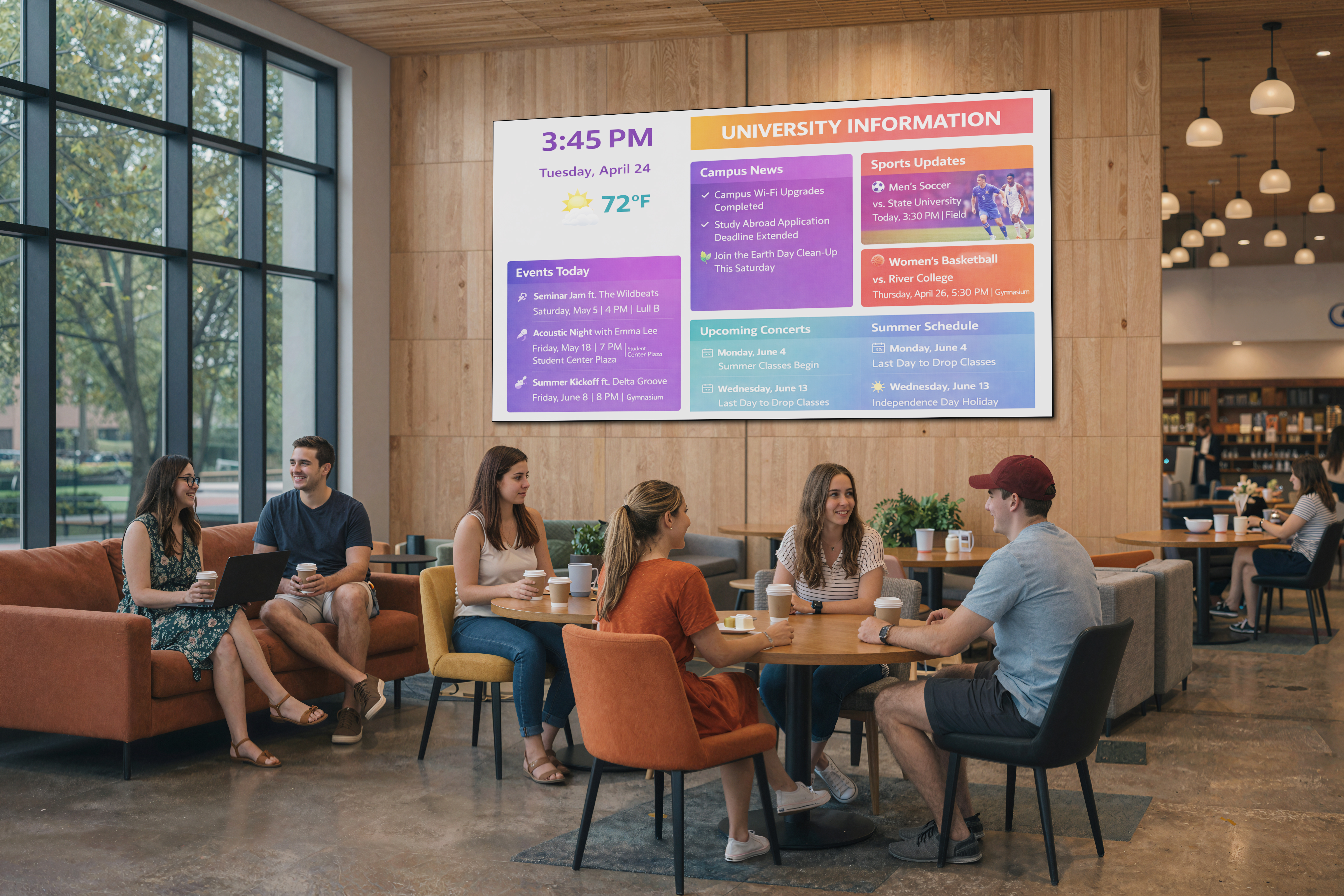
The final challenge for many higher-ed environments is daylight. Contemporary academic buildings love glass because it lets natural light flood the space. That’s great until it flattens the image of whatever is on screen.
AIO dvLED maintains a bright and high contrast image even when the sun is at its peak, and the deep, low-reflection surface keeps the image readable rather than washed out. It delivers presentations that keep their punch, no matter the ambient light condition.
A spectrum of solutions
Rather than settling for a single standard, forward-thinking institutions are tapping dynamic portfolios of display technologies. This flexibility allows them to pair the perfect visual solution with the specific lighting and functional requirements of each space, ensuring an optimal experience across the entire campus.
Epson’s commitment to a multi-platform display portfolio that covers your needs regardless of budget, display requirements, or ambient light in the space, means a comprehensive spectrum of solutions that can help solve for the complexities of modern campus design. Learn more at Epson.com/dvled

