

Walk into a modern classroom, and you’ll likely see a space designed for collaboration. Desks are easily reconfigured, students are working in small groups, and lessons are dynamic. Yet, many schools still struggle with static, heavy classroom displays that restrict where teachers can teach and how students can participate.
As school districts plan their next technology upgrades, a growing number of educators and IT directors are choosing a different path: high-brightness laser projection.
Instead of copying the features of traditional displays, laser projection completely shifts the focus to what matters most — student outcomes and administrative sanity. Here is how this technology is reshaping the school day.
Designing a classroom without borders
In a typical classroom, layout options are often dictated by where the heavy flat panel screen is mounted on the wall. Laser displays break this mold by decoupling the display size from a physical frame.
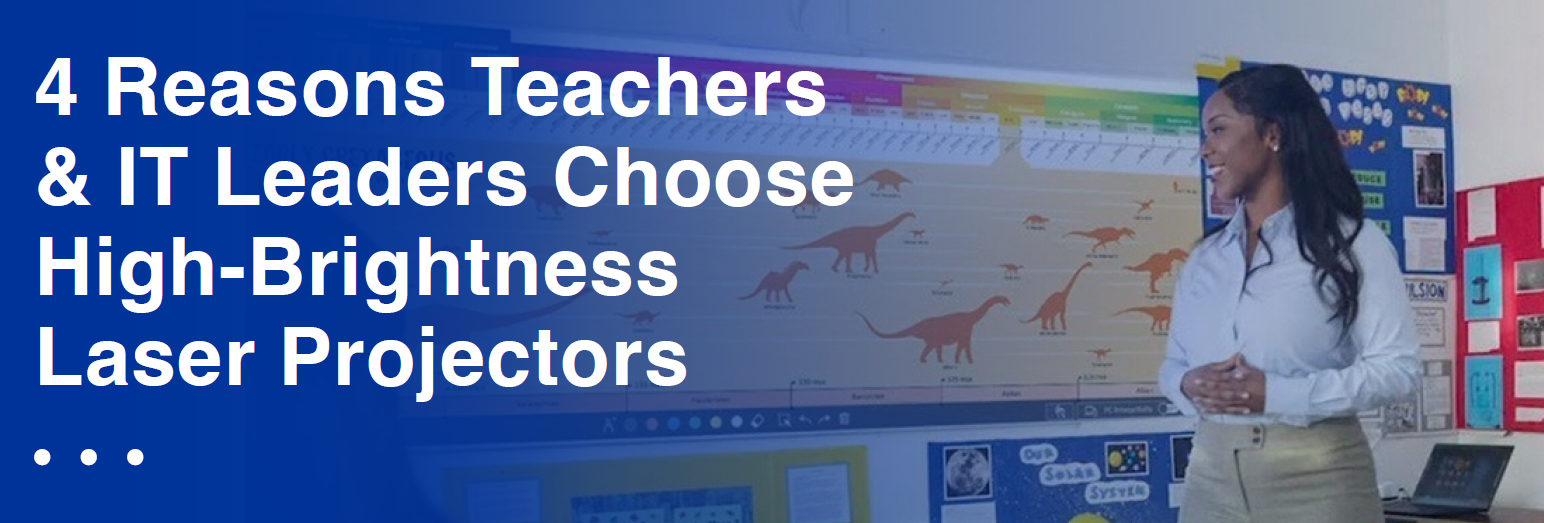
Because projection works on almost any flat surface, educators can instantly scale their visual aids to fit the lesson, rather than shrinking their curriculum to fit a fixed screen. This allows for immersive, large-format learning environments where every student in the room has a clear line of sight, promoting active participation and reducing visual fatigue.
Reclaiming valuable real estate
The physical whiteboard remains one of the most powerful and intuitive tools a teacher has. When a school installs a permanent flat panel, it often means sacrificing valuable dry-erase space.
Laser displays solve this classroom compromise. Teachers can overlay digital media directly onto their whiteboards, allowing them to annotate, draw, and build on top of projected images in real-time. It’s the perfect marriage of physical and digital teaching methods.
Unlocking campus-wide agility
Educational needs change from period to period, and classroom configurations must adapt. Heavy, fragile screens require complex mounting and present safety concerns if they need to be moved.
In contrast, compact laser projectors offer unmatched mobility. They can easily be relocated to support a temporary workshop in the library, an assembly in the cafeteria, or a collaborative project in a common area. This agility ensures that a school’s technology investment is utilized across the entire campus, not locked in a single room.
Relieving the burden on IT support
For school IT departments, the best technology is the kind they don’t have to think about. Traditional classroom displays can often require a steady stream of maintenance tickets, calibration adjustments, and hardware troubleshooting.
Solid-state laser technology can help reduce these operational headaches. Built for maximum reliability and continuous school-year operation, these systems run smoothly with minimal oversight. Backed by centralized network management software, IT administrators can monitor, control, and update every display on campus from a single dashboard, transforming maintenance from a reactive scramble into a scheduled, streamlined process.
Curious about how these classroom dynamics play out in real school environments?
👉 Scroll through our carousel to see why teachers and IT choose high-brightness projectors:
For more resources and deployment strategies for your district, check out Epson.com/education.

